Erik Learned-Miller Erik G. Learned-Miller
Assistant Professor of Computer Science
University of Massachusetts, Amherst

140 Governors Drive, Office 248
Amherst, MA 01003

Phone: (413) 545-2993
E-mail: elm at cs.umass.edu

Congealing

Home Research Publications Students Teaching Funding Code FAQ

Visual identification example
Recognition using One Example using Hyper-Features

Link to Project Page

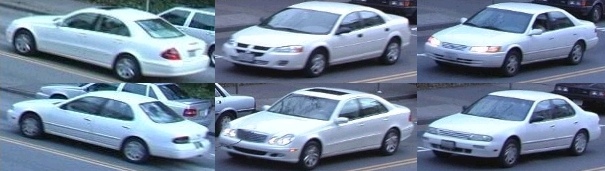
In this project, we attempt to solve the problem of object identification, which is specialized recognition where the category is known (for example cars or faces) and the algorithm recognizes an object's exact identity (such as Bob's BMW). For example, we might be given images of cars like those on the left side of the figure and be asked to find which of the four cars on right are the same as either of the two on the left.

See Andras Ferencz's web-site for more about this project here. This work is a continuation of Andras Ferencz's thesis work at Berkeley.

Congealing Congealing for Automatic Alignment

Link to Project Page

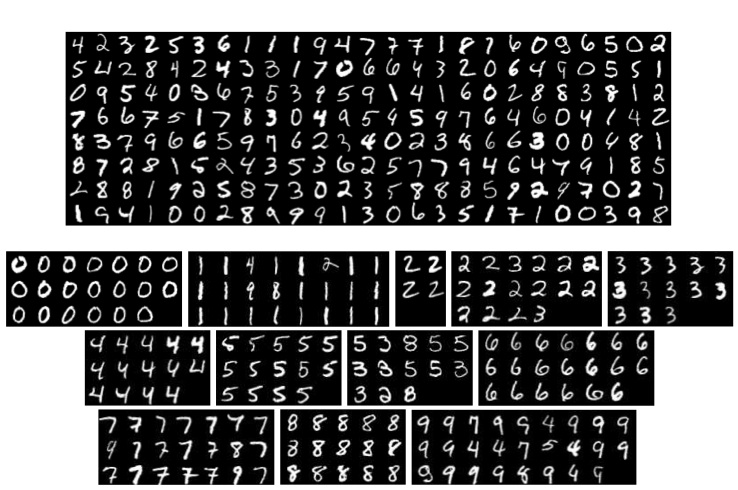
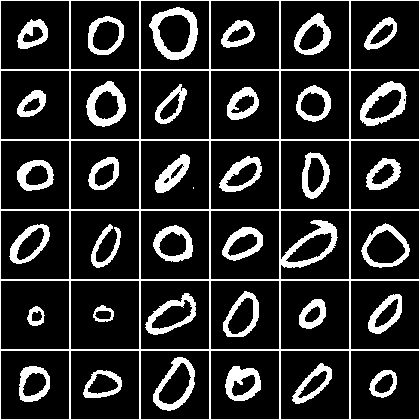
I recently developed a process I call congealing , which is a way of aligning a group of objects simultaneously , using an entropy minimization procedure. This can be used to perform traditional "preprocessing" tasks such as deskewing, centering etc. Try moving your mouse over the images of handwritten zeroes at left. As you do, the results of the congealing are shown. Notice that the zeroes have been "normalized" to be much more similar to each other.

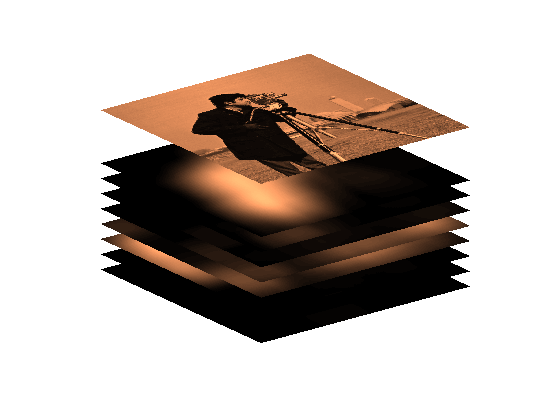
In my Ph.D. thesis, I extended congealing to gray-scale images and other multi-valued images, and to one-dimensional, three-dimensional, and four-dimensional data sets, including 3-D brain volumes.

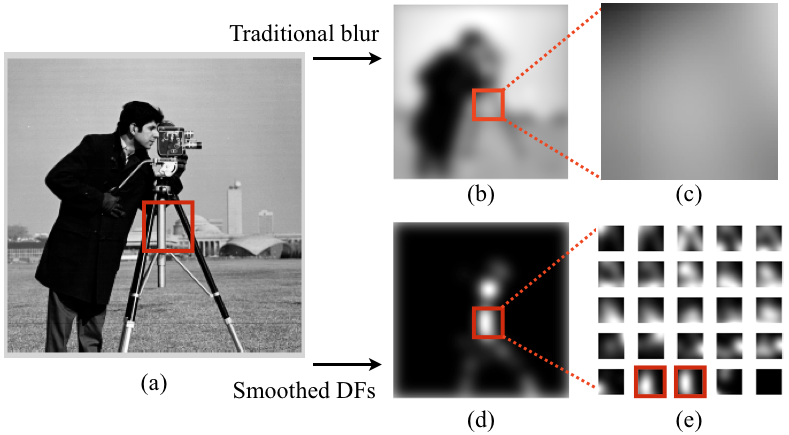
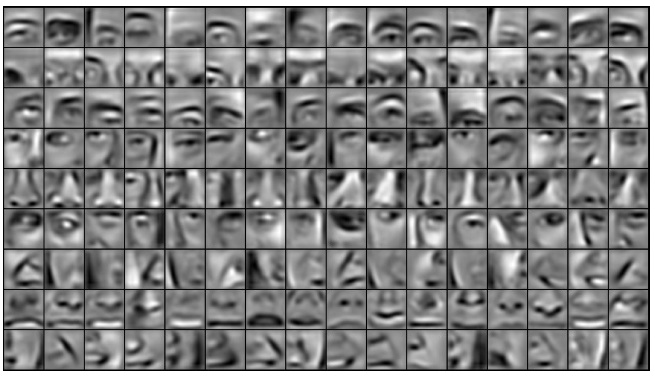
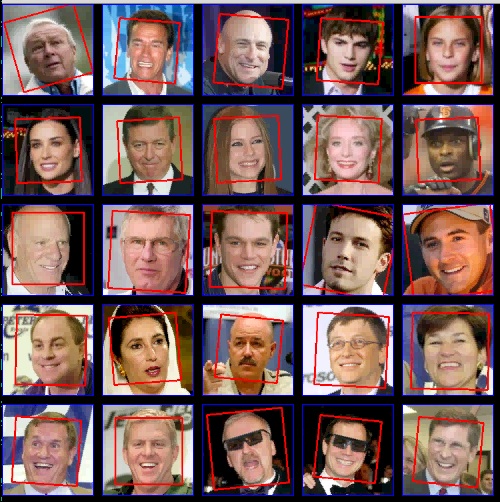
Currently, our goal is to extend congealing to more complex features (than single pixel features) such as Lowe's SIFT descriptors. Then this method can be applied to aligning complex images such as faces on arbitrary backgrounds.

Dexter
Dexter

Link to Project Page

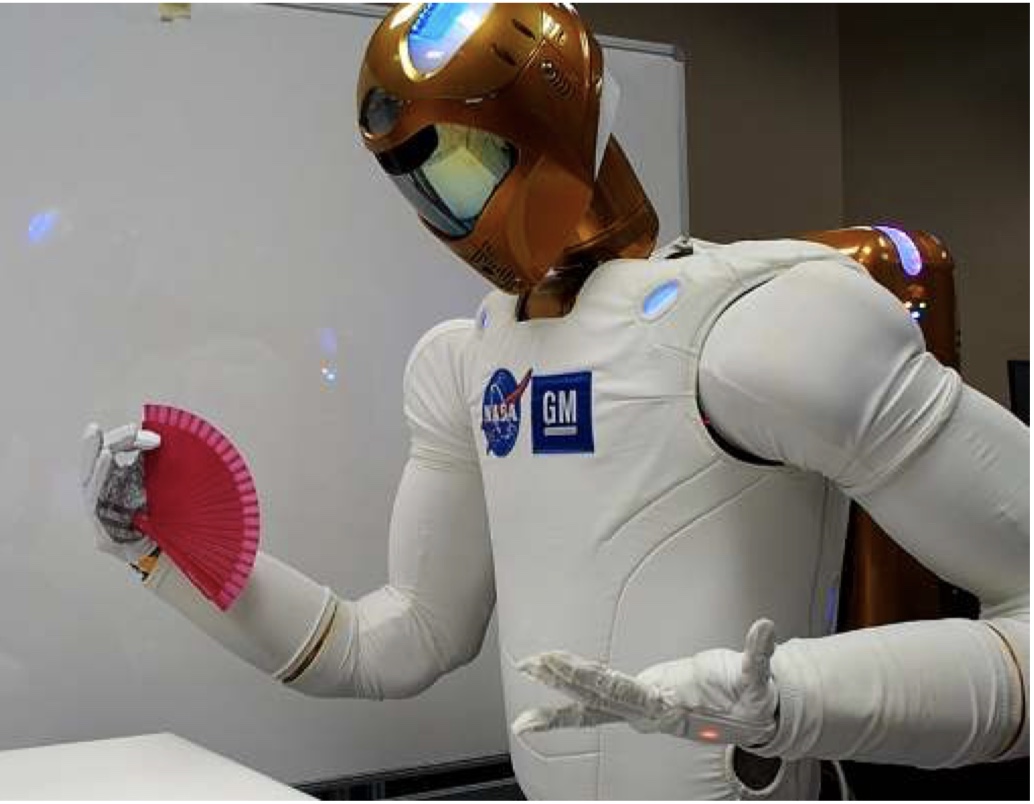
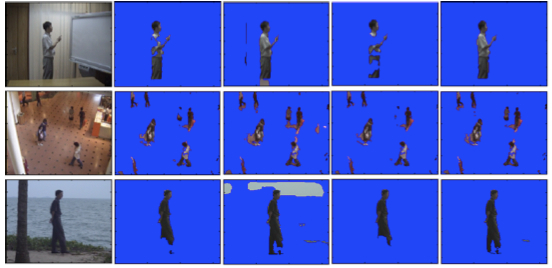
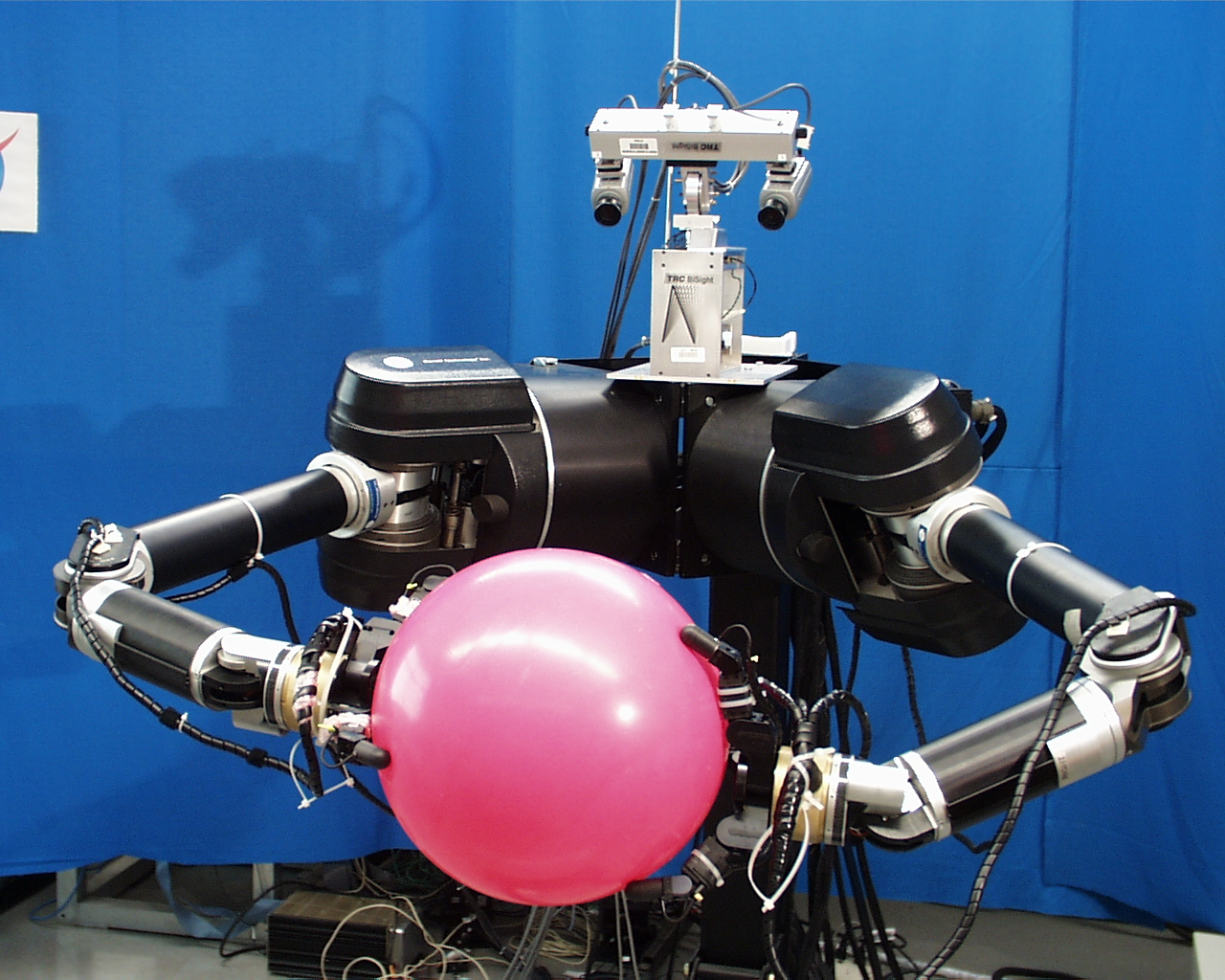
One of the most basic capabilities for an agent with a vision system is to recognize its own surroundings. Yet surprisingly, despite the ease of doing so, many robots store little or no record of their own visual surroundings. This paper explores the utility of keeping the simplest possible persistent record of the environment of a stationary torso robot, in the form of a collection of images captured from various pan-tilt angles around the robot. We demonstrate that this particularly simple process of storing background images can be useful for a variety of tasks, and can relieve the system designer of certain requirements as well. We explore three uses for such a record: auto-calibration, novel object detection with a moving camera, and developing attentional saliency maps.

VIDI
Text Recognition

Link to Project Page

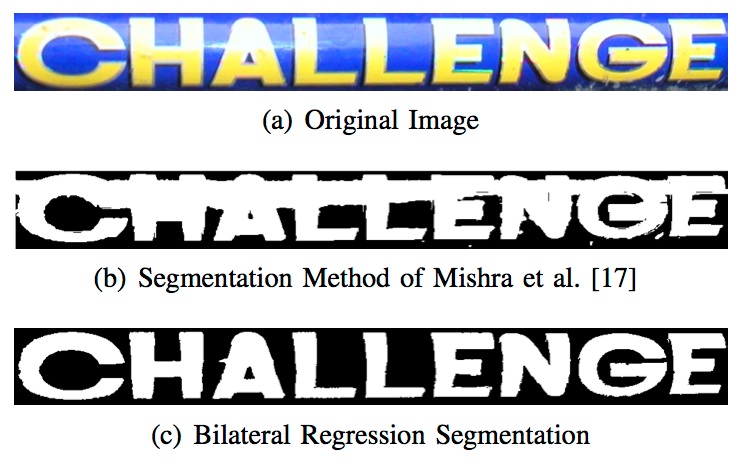
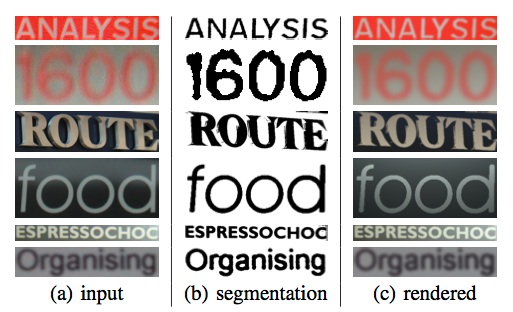
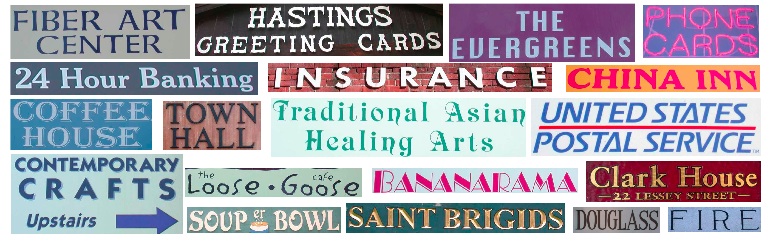
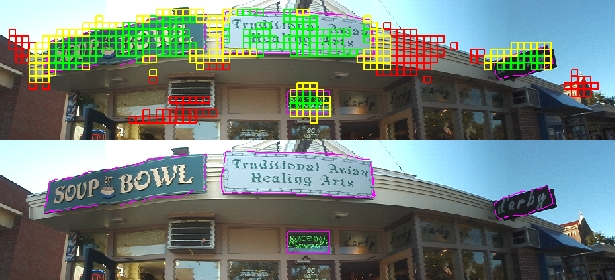
The goal of this project is to design and build a wearable system for the visually impaired that will detect signs in an image and recognize them. We hypothesize that at a low level signs fall into particular class of textures that are distinguishable from many others that may be found in natural scenes. Therefore, discriminating textures will be the first step toward extracting and eventually identifying signs. Other work has focused exclusively on detecting and tracking text in images and video. Even those signs that consist purely of text are often in unusual fonts and/or arrangements that pose challenges to traditional text detectors. More importantly, many signs consist of recognizable logos that contain no text at all. We investigate whether all of these regions can be identified at a low level in an integrated model.

Robust, Accurate, Direct ICA
aLgorithm
RADICAL, a New ICA Algorithm

Link to Project Page

There has been a great deal of new work recently on the problem of Independent Components Analysis (ICA). A variety of new and interesting methods have emerged including Kernel ICA (Bach and Jordan), a method by Hastie and Tibshirani at Stanford, and other methods. I have my own new ICA algorithm, called RADICAL, which I developed with John Fisher at MIT.

On synthetic experiments across a wide range of source densities, RADICAL is more accurate than every other algorithm we tested, including Kernel ICA, Fast ICA, extended Infomax, and JADE. It also appears to be very robust to outliers. You can find out more from our recent paper in the Journal of Machine Learning Research here. Or check out the web page for the algorithm here, from which a MATLAB version of RADICAL can be downloaded.

Image Synthesis with Color Flows
Learned Color Constancy

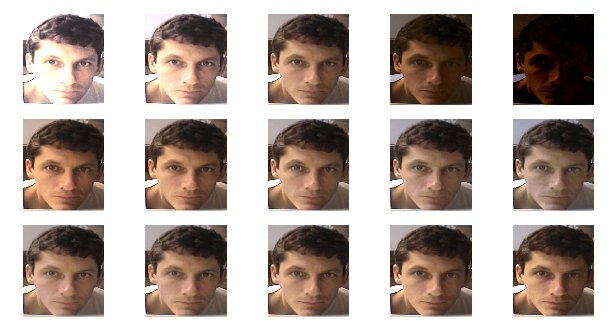
One tricky thing about objects, especially white objects, is that they can "appear" as almost any color. A white object in the early morning looks rather bluish but in the mid-day sun may look yellower and during a sunset might appear pink. How then can we use color to help us, rather than hinder us, in object recognition? Traditional approaches to this difficulty have often involved estimating the illuminant, after which one can "correct" the image to appear as if under a standard illuminant.

Collaborating with Kinh Tieu at MIT, we sidestepped the problem of illuminant estimation by modeling only how colors commonly change together under natural lighting changes. Two images can then be inferred to represent the same object if there is a statistically common mapping between the colors of the two images. We report on this method and its applications in an ICCV paper and in this NIPS paper.

The image at left shows how plausible novel images of an object can be synthesized from joint color changes learned from a totally different object. The synthesized images were generated with only a single example image, and with no a priori or built in knowledge of lighting statistics, optics, or the physics of illumination.

Acromegaly Screening for Acromegaly

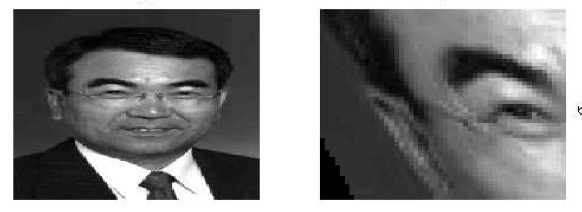
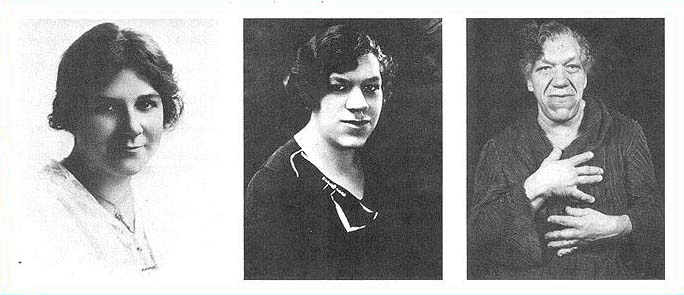
The panel on the left shows three photographs of a woman who developed a condition known as acromegaly. The first picture is shown when she is young and symptom-free. The second and third photos show the progress of the disease over time. This condition results from an excess of growth hormone, and causes disfiguring growth of the bones of the skull and swelling of the face, hands, and feet. Our goal in this project is to detect acromegaly automatically from generic photographs so that it can be diagnosed earlier, leading to better clinical outcomes. In collaboration with Volker Blanz and others, we have developed a classification system which prescreens patients for acromegaly.

This project was originally conceived by my father, Dr. Ralph E. Miller, who practices endocrinology in Lexington, Kentucky. Qifeng (Luke) Lu at UMass has been a major contributor as well.


math_demo
Mathematical Expression Recognition

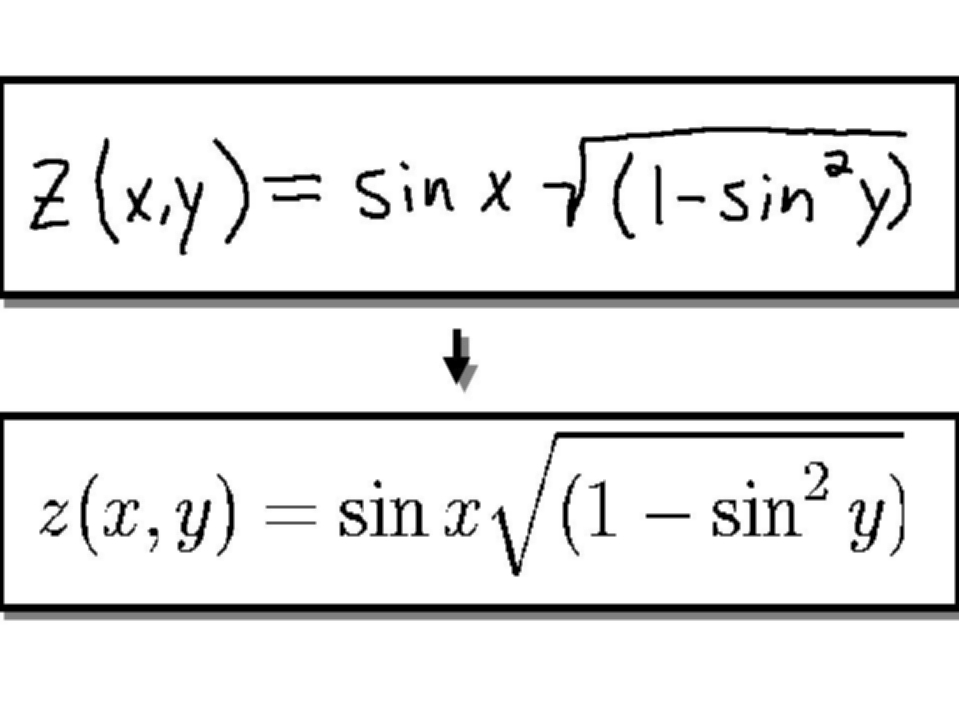
Suppose you wanted to scan in a mathematical expression from a book and have it automatically converted to LaTeX, or write an expression on a pen-based computer and have it automatically read and evaluated. Paul Viola and I wrote a paper describing our early system for recognition. Nick Matsakis continued the work and got a great system working. For a demo of Nick's new and improved system, click on the picture at right.

MR Bias Correction MR Bias Correction

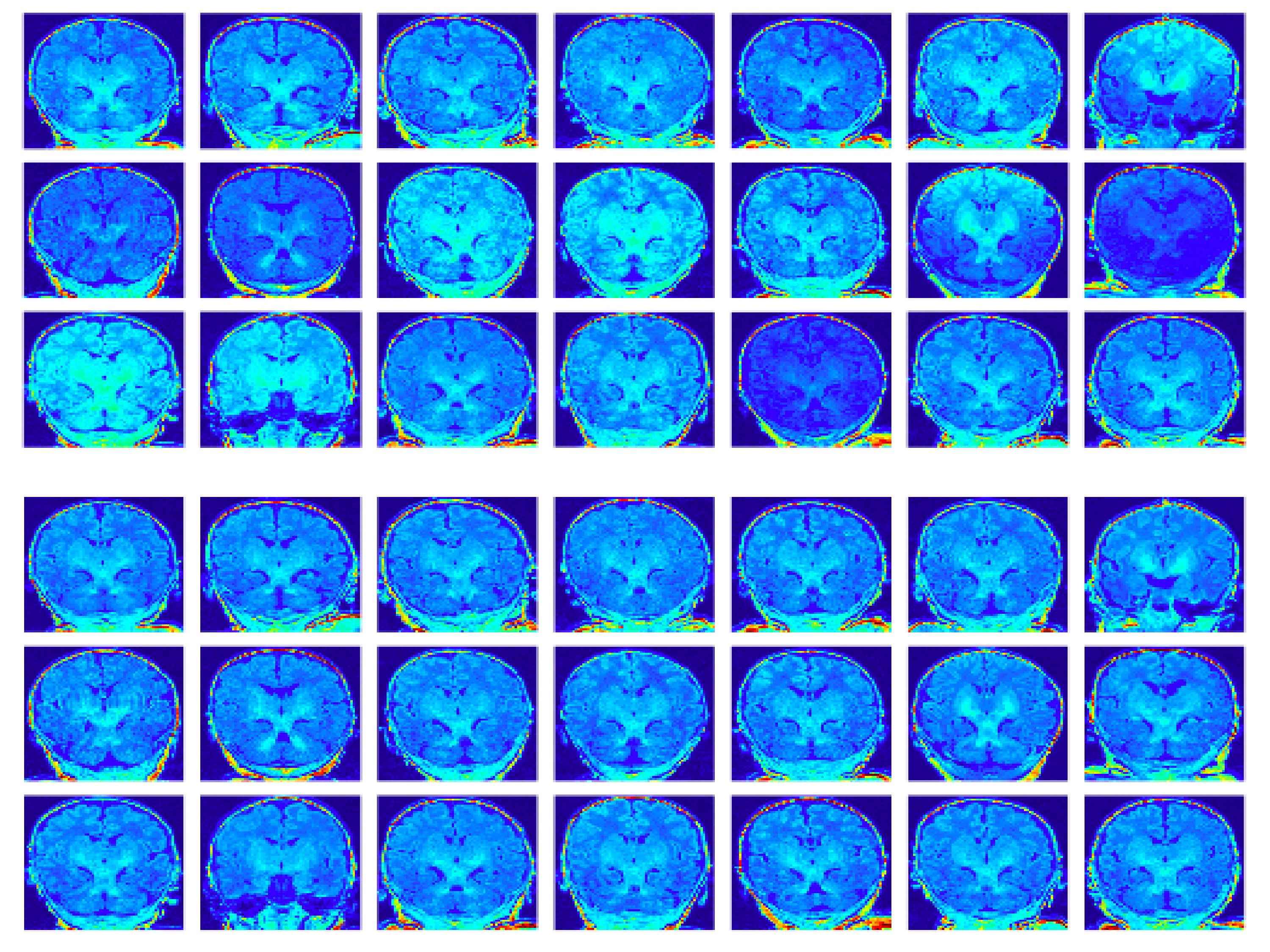
The goal of magnetic resonance (MR) imaging is to form images of patient anatomy for diagnosis and other analyses. Often these images exhibit brightness distortions due to imperfections in the measurement apparatus. The goal of this work is to eliminate these imperfections from MR images. Previous approaches have been model-based (Wells) or have operated on a single image to reduce brightness entropies (Viola). Our method reduces entropies ACROSS images, using information about the distribution of brightness values at a particular location.

On the left are two sets of MR images of infant brains. The top set of images shows the brightness biases due to the scanner imperfections. The other set shows the images after correction by our algorithm. I have a NIPS paper with Parvez Ahammad that describes this work in detail here.


Near Uniform Partitions Near Uniform Partitions

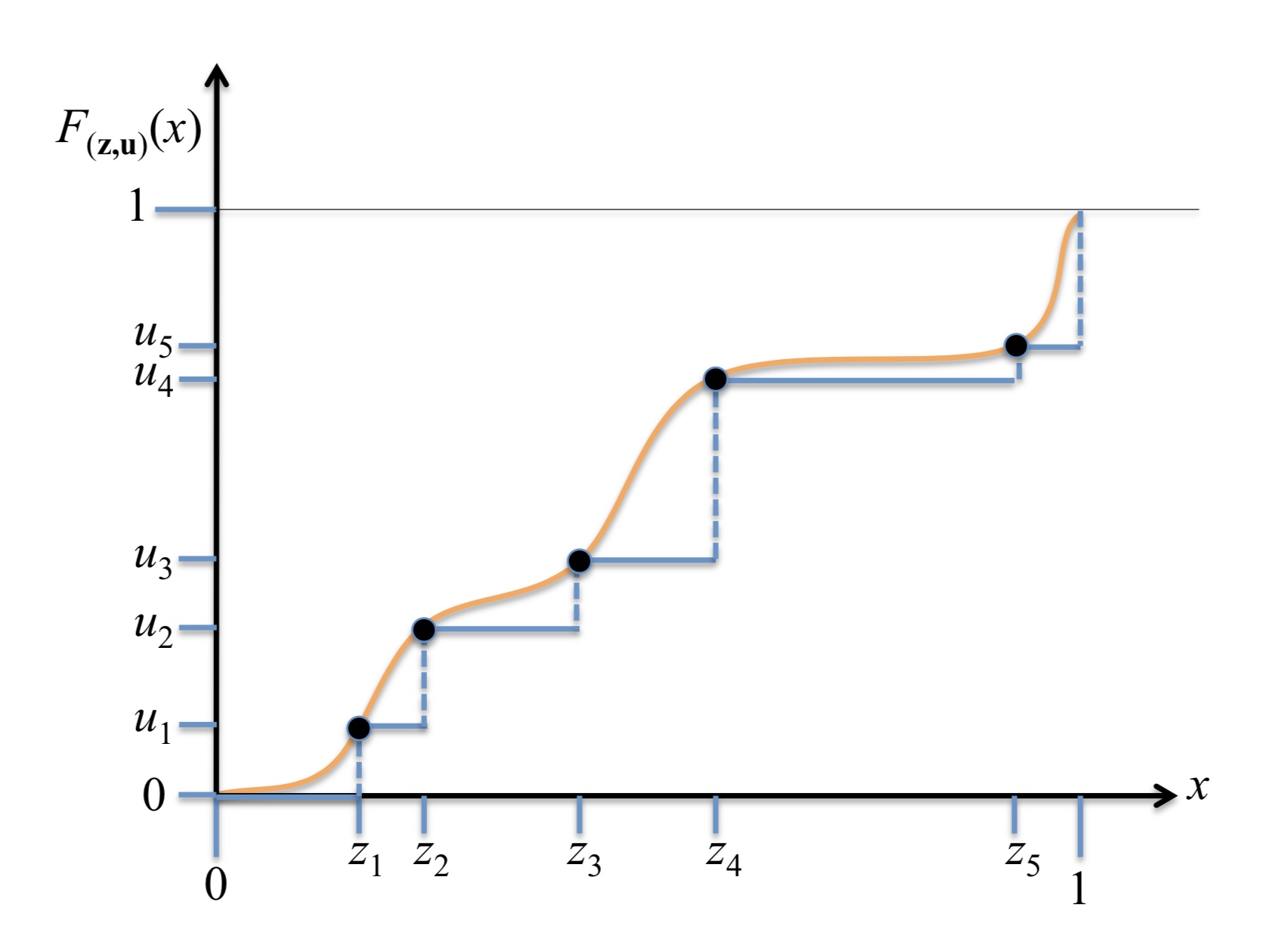
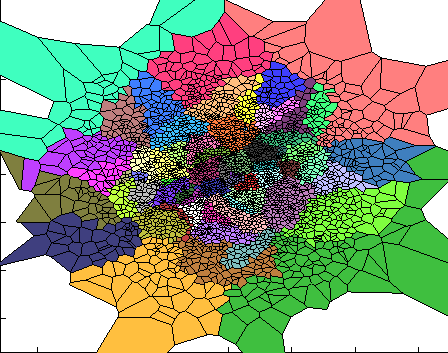
Near uniform partitions are a technique for dividing a probability space, using only a set of random samples from that space, into chunks of approximately equal probability measure, or into chunks whose probability measure is approximately linear in the number of constituent subregions. The figure at left shows how samples from a two-dimensional Gaussian distribution can be used to split the Gaussian up into chunks whose probability masses are approximately linear in the number of subregions. Notice that regions in area of high density are smaller, and regions in area of low density are larger, resulting in a near uniform mass for each region. Near uniform partitions can be used in estimation of information theoretic quantities such as entropy, mutual information, and Kullback-Leibler divergence. They can also be used in hypothesis testing. For a discussion of their use in entropy estimation, see this short ICASSP paper.


manifold
	       density Probability Distributions on Curved Manifolds

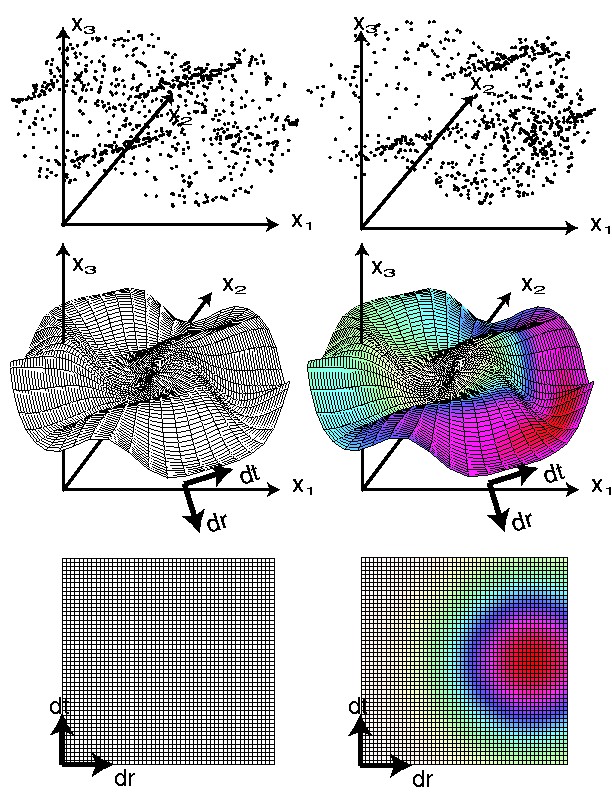
Christophe Chefd'hotel and I developed kernels for these curved spaces, allowing us to obtain better probability density estimates for these "shape" spaces. This work is described in a CVPR paper here. The figure at right shows conceptually that a direct "Euclidean distance" between points is not always appropriate in a curved space.
Most non-parametric probability density estimators, which estimate a probability density from a set of sample points, are used in Euclidean spaces with standard Euclidean probability densities like the multidimensional Gaussian distribution. Certain spaces, however, like the set of linear image deformations (represented by 2x2 matrices) are more naturally described by a curved space. Hence, modeling densities on such spaces using mixtures of Gaussian distributions is not appropriate.


Masters Masters Thesis: Improved Surface Area Estimates Using Alternative Voxel Shapes

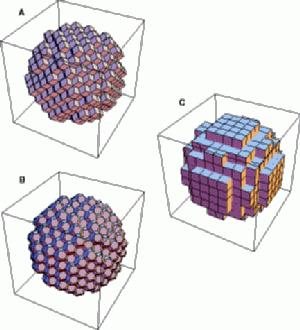
Check out my Master's Thesis if you're a fan of stochastic geometry. It addresses the advantages and disadvantages of using various voxel shapes (other than the standard rectangular prisms) to tessellate 3-D space.