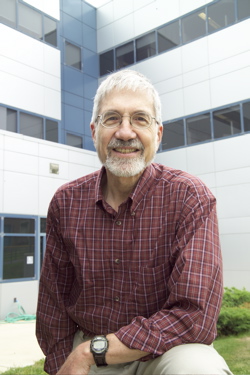
Arnold L. Rosenberg
Research Professor
Computer Science, Northeastern University
Distinguished University Professor Emeritus
Computer Science, University of Massachusetts Amherst
|
|
Arnold L. Rosenberg
Research Professor
Distinguished University Professor Emeritus |
On January 1, 2008, I retired from the University of Massachusetts Amherst, where I held the rank of Distinguished University Professor in Computer Science. I now spend most of my time doing research and writing, with an appointment as Research Professor of Computer Science at Northeastern University (Boston, MA).
I had an appointment as Research Professor of ECE [primary] and Computer Science [secondary] at Colorado State University from 2008-2012. Before I joined UMass in 1986, I was a Professor of Computer Science at Duke University from 1981 to 1986, and a Research Staff Member at the IBM Watson Research Center from 1965 to 1981. Over the years, I held visiting positions at Yale University and the University of Toronto, in addition to part-time positions at the predecessor of Polytechnic University and at New York University. I was a Lady Davis Visiting Professor at the Technion (Israel Institute of Technology) and a Fulbright Senior Research Scholar at the University of Paris-South.
My research program is continuing unabated post-retirement---perhaps even at a higher level of intensity, with no required teaching and committee work. My main research focus is on developing algorithmic models and techniques to deal with the many new modalities of "collaborative computing," the use of many, possibly geographically dispersed, computers to cooperatively solve individual computing problems. My current main research/writing projects include:
I have (co)authored more than 175 technical papers on multiple topics
in theoretical computer science and discrete mathematics (including one in
linguistics); these appear in venues devoted to computer science,
engineering, mathematics, and/or linguistics. In collaboration with
my friend and former student, Prof. Lenwood S. Heath, I coauthored
the book,
 Graph Separators, with Applications.
As noted above, I have recently completed a textbook on
Computation Theory,
The
Pillars of Computation Theory: State, Encoding, Nondeterminism,
Theoretical
Computer Science: Essays in Memory of Shimon Even.
a volume in memory of my late dear friend Shimon Even.
I am a Fellow of the ACM, a Fellow of the IEEE, and a Golden Core member of the IEEE Computer Society.
I received an A.B. in mathematics from Harvard College in 1962, and an A.M. and Ph.D. in applied mathematics from Harvard University, in 1963 and 1966, respectively.
In response to many requests, here is a link to my one-and-only linguistics paper "The Hardest Natural Languages" (in PDF) , which appeared in the journal Linguisticae Investigationes. Responding to allegations in various blogs --- Everything in this article is accurate!
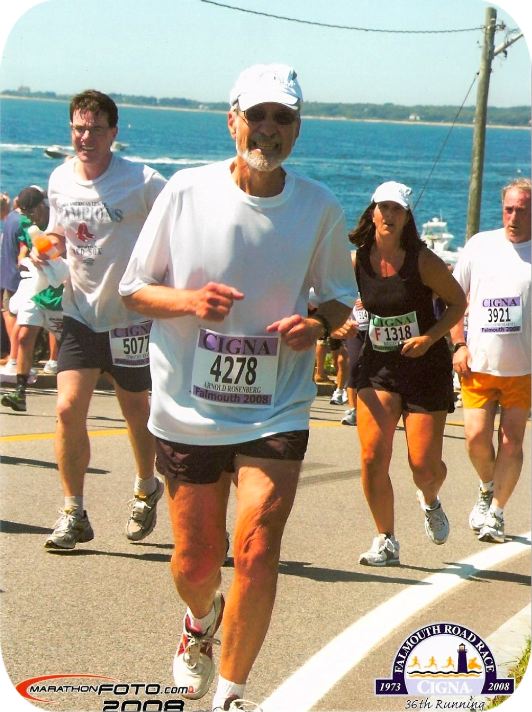
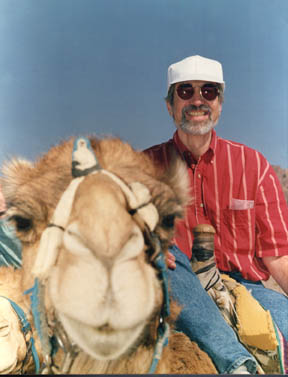
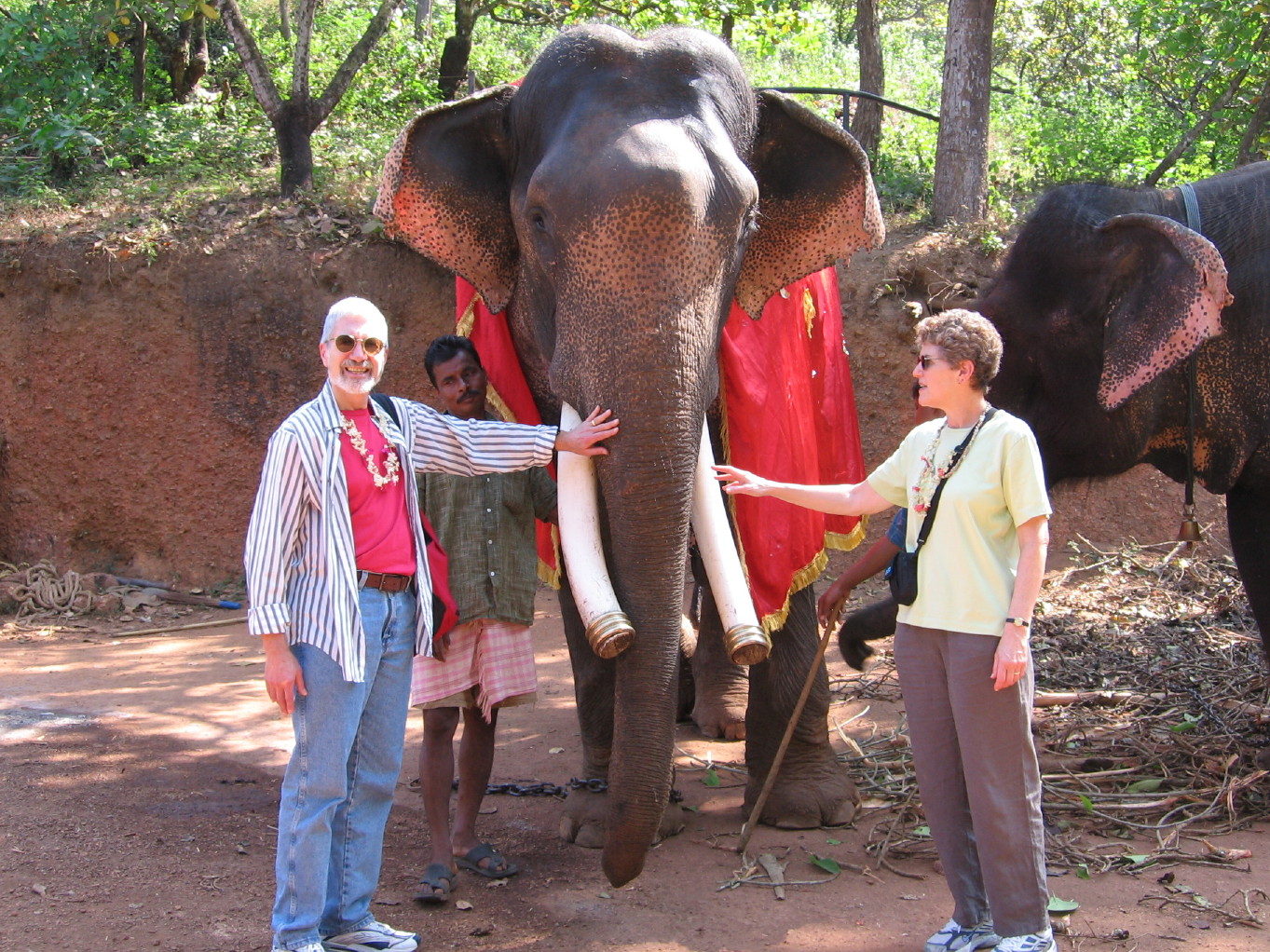
My extracurricular activities include travel (see the pictures below), jogging (slowly, but faithfully), and writing poetry (samples available on request). Here I am "running" the 7.1-mile Falmouth Road Race. (I just completed my seventh consecutive running of the Race.)
|
|
|
 Bibliography
 EMAIL:
rsnbrg @ cs.umass.edu or rsnbrg @ ccs.neu.edu
EMAIL:
rsnbrg @ cs.umass.edu or rsnbrg @ ccs.neu.edu